12.21.2012
back with a vengeance.

3.25.2012
moving forward.

Ok friends and family,
It's official: This blog is through. All of my writing efforts will now be poured into a graphic novel style memoir that I'm taking way seriously. We'll see how it goes; I'm excited.
The good news is that I have a new blog as equally egocentric and revealing as this one and possibly even more immature: I will be joining thousands of high school students across the world by posting a picture of myself daily. You will find my visual diary here: socialexplosion.tmblr.com.
I hope to expose weather conditions, love affairs, scenery, events, haircuts, and weight variations throughout the years.
It's been fun guys. Thanks to everyone who's ever bothered reading.
1.04.2012
just a boring blog entry.

I cut my hair again. Big fat surprise.
People who've known me for years didn't even notice. My fresher Brooklynite friends were so excited to see my real self that they stopped singing momentarily to blurt their approval during branch choir practice when I walked in early for church the following day. It's great to have such overwhelming approval about peeling a layer back.
I don't know what to say. New York is a weird place. Brooklyn is a weird place. Everything in my apartment has been carried in by my arms. Except the stuff my roommate carried in. And the couch. I paid a long-haired smoker with an old van like the one my mom used to drive us around in $60 to move my lovely craig'slist purchase over the threshold and into my tiny abode. He was nice.
This hands-on lifestyle and obligation to forge my own sanctuary forces me to grow up. It juices out my maternal instincts. I've started cooking again. It's become my biggest hobby. I bake only for birthdays and work/church functions. Otherwise, I'm freezing soup, packing home-made granola bars, and pecking at the spinach salad I stuff into the same ikea tupperware I bring to work for lunch everyday. Oh, and oats. I'm obsessed with eating them raw and with jam and cinnamon and milk and honey and yogurt. I don't know why.
Running, on the other hand, makes me feel like a gangster. I own this place. Ask anyone who witnesses white puffs escape my mouth at 7 o'clock every morning. The numbers are few. I've pounded the gray gum sidewalk spots in every direction. I've battled the hills in jewish, chinese, and russian neighborhoods. The cold can't keep me in.
6.16.2011
hip-hop?

A recent paper for my English class:
There is no question about the ubiquitous infiltration of hip-hop in American culture. We've all felt it bang at our car windows during stoplights, seen boxer shorts protruding from low-hanging, oversized jeans, watched graffiti tags creep onto local train cars and bridges, and witnessed grade school girls imitate sexy, Beyonce-style dance moves.
However, despite its undeniable popularity, many latter-day saints seek to shut it out. It is no secret that many popular hip-hop genres are steeped in the glorification of sex, violence, drugs, and misogyny. Two of hip-hop's legendary stars, Tupac and Biggie, were both gunned down in the 1990's. It is rare to find a top-selling hip-hop album devoid of words like “ho” or unaccompanied by a parental advisory sticker for the use of far cruder language. The New York Times op-ed writer, Brent Staples wrote in response to Lil’ Kim’s plans to release an album while serving prison time: “When it comes to rap music, what's poisonous for the culture - and dangerous for minority youth - tends to be great for album sales (par.15)”.
Despite the fact that hip-hop culture seems diametrically opposed to LDS values, why are so many of our faithful youth drawn to it? While some are surely seduced by its rugged sense of invincible carnality, peeling back a layer to examine its origins reveals something of greater interest.
Hip-hop was born in the Bronx in the shadows of the 1970's economic bust. Automobile manufacturing and steel mill jobs moved overseas for cheaper foreign labor; social services were cut with waning budgets. Public spaces in black communities became governed by lethal drug economies. It was in the face of this that hip-hop emerged, piece-by-piece, from the economical social event known as the block party. DJs competed in percussion break battles, cleverly employing the only instrument they had easy access to: existing vinyl records. Dancers judged the competitions, and MCs eventually started rhyming to the beats. In many cases, hip-hop became an alternative to gang violence as battle rapping substituted guns and knives. But above all, the greatest victory of hip-hop ingenuity lies in the fact that it provided a voice for a destitute and marginalized population (Dyson 180-182).
“When hip hop began in the South Bronx, it was the voice of the voiceless. Hip Hop artists spoke to the despair and pain of urban youth and the poor who were often without a voice...It was legendary hip hop pioneer Chuck D of Public Enemy who famously called hip hop the 'CNN of the ghetto' (Muhammad par. 1).”
As Mormons, we know that almost anything can be uttered over a pulpit. Alongside the dark and hedonistic, many hip-hop artists' work brims with positive messages from sources of great authenticity and sincerity, often offering advice about how to overcome difficult circumstances. They pay homage to their hometown, friends, family, and ancestors, often boasting of their self-determination, ingenuity, and luck in surviving along the way.
Grandmaster Flash's “White Lines (Don't Do it)” released in 1983, warned its underprivileged Bronx audience of the dangers of cocaine, addiction, and drug smuggling. The Gift of Gab cautions against average contemporary idleness in his 2001 album, Blazing Arrow: “No more of that sittin' in a slump/ No more of that coulda-woulda-shoulda junk/No more of that waiting for the inspiration, innovation or a green light--now begin/No more of that lettin' all your time pass/No more petty illusions of the mindless/It's time to expand, power from within, you're takin' over this dominion/Green light, now begin”
While hip-hop is often used to promote filth, can it also be utilized to instill personal integrity?
It is an unfortunate phenomenon that sensationalism sells. It is even more unfortunate that the white record executives who eventually marketed hip-hop to the American public knew that fact, pushing the most lewd and sexually charged hip-hop genre--gangsta rap--to a pop stature that has shadowed socially conscious hip-hop from the public view. The scholar Michael Eric Dyson wrote, “Much of gangsta rap makes voyeuristic whites and naïve blacks think they're getting a slice of authentic ghetto life when in reality they're being served a colorful exaggeration...[and] many critics argue that since gansta rap is often the only means by which many white Americans come into contact with black life, its pornographic representations and brutal stereotypes of black culture are especially harmful (180-181).”
Although fully loaded with a unique history and culture of its own, hip-hop is a medium for expressing thoughts and emotions. Our familiarity with mediums like paint, books, rock n' roll, country music, and the internet all demonstrate that mediums can become vehicles for the good or bad, depending on what the author intends.
Roger Ebert wrote: “Rap has a bad reputation in white circles, where many people believe it consists of obscene and violent anti-white and anti-female guttural. Some of it does. Most does not. Most white listeners don't care; they hear black voices in a litany of discontent, and tune out (par. 8).”
Of course hip-hop music doesn't appeal to everyone. We certainly don't need to login to iTunes and hurriedly purchase the latest socially conscious hip-hop album to display our support. But as latter-day saints, we view ourselves as culturally open and diverse. We teach our missionaries to speak numerous foreign languages in an attempt to provide the greatest amount of respect and fluidity within numerous cultures covering the earth. We seek to reach out in love to people of all backgrounds whether inside or outside of our faith for the cause of a greater good. As much as our efforts for diversity extend overseas, a quick dismissal of hip-hop culture could cause us to overlook our immediate neighbors. It's a lose-lose situation. Like most marginalized groups—early American colonizers, concentration camp survivors, and our very own pioneers—hip-hop's survivors of urban devastation reveal inspiring stories of principled persistence and hope.
I think we can all agree with Mos Def in his song, “Sunshine”: “[I don't care] what type of brand you are/I'm concerned what type of man you are/What your principles and standards are.”
5.19.2011
never enough.
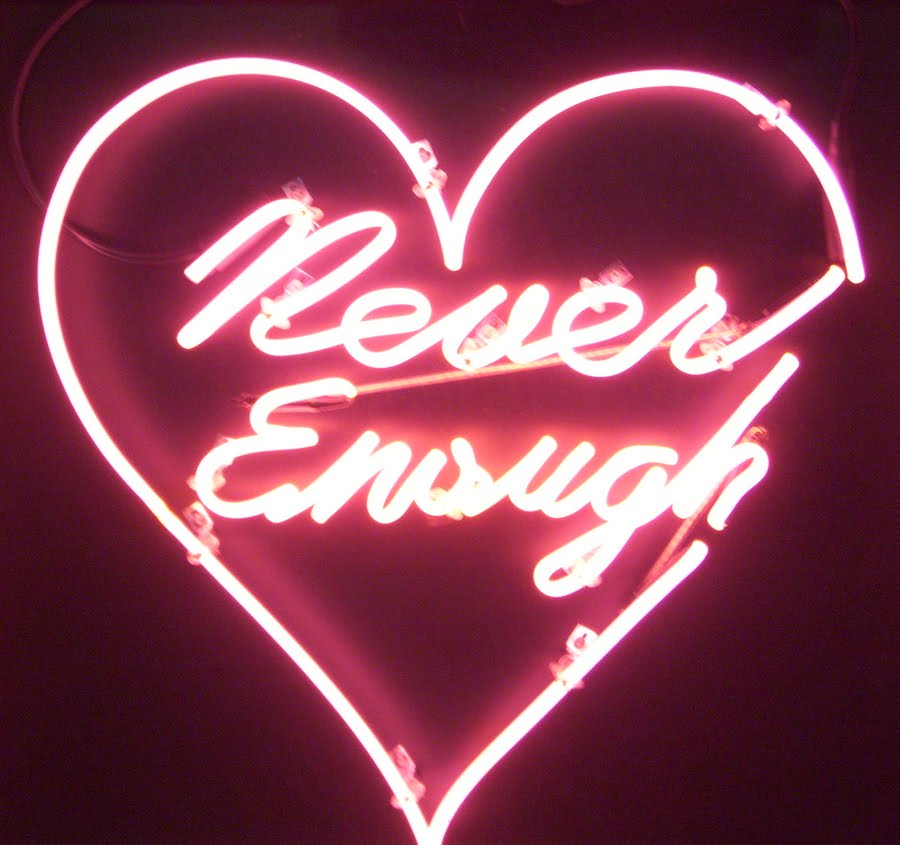
Somehow I became obsessed with running. It's so weird. After 27 years of sedentary art creation/appreciation seated comfortably at desks and cushions, I suddenly decided to run so much that I injured my Achilles tendons. And every day during the three weeks that I swam or biked as I waited for my tendons to man up, I missed it.
My simple secret is this:
1. Use a treadmill, it keeps you going like a cheerleader.
2. Listen to hip hop. It doesn't matter what kind; it doesn't matter how misogynistic it is. All that matters is that it has a beat.
I promise you'll be able to run endlessly. The only thing that that will stand in the way are your underdeveloped, art-appreciating tendons. I've had to cut back to only 3 miles a day and have resorted to lifting weights with the other half-hour of my scheduled workout.
My sister was recently promoted at a job where she'd been previously rock-solid certain that they hated her. They pay her in dirt, make her beg for vacation, guard her timecard like Natzis, and slap her with frequent verbal reprimands for harmless mistakes. But, surprise, surprise, she discovered she'd been performing as one of their best employees. When spreading the good news to my mother she explained, "I just can't help but to try to do well."
So maybe that explains it better than the hip hop and the endorphin rushes. Maybe I was bred into this pack of neurotic people who have no real hobbies except to do well at things; even painful things. Because the one way that design really doesn't enrich my life is by forcing my butt into an office chair all day and coaxing me into eating snacks to stay awake all night as I wrestle with my projects. I had to combat it somehow; conquer it before it conquered me. And you can't really do well at anything until you love it.
5.08.2011
the cloth i'm cut from.
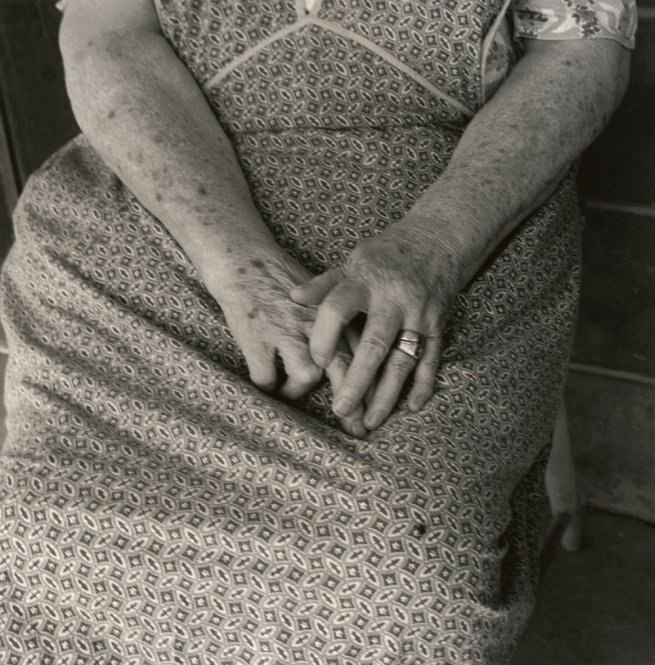
Dorothea Lange's photography currently on display in BYU's Museum of Art exhibition, "3 Mormon Towns" will not leave my mind although I first saw it first over two months ago. It was shot in 1953 in the towns of Gunlock, St. George, and Toquerville, Utah. She and Ansel Adams set out to create a photo essay to be published in Life Magazine (although they weren't on assignment.) Lange never informed her photographic subjects of the end goal of the photos, and they were subsequently shocked when it was published. Ansel Adams felt she'd betrayed and disrespected them; neither were satisfied with the end result.
Although commentary on this exhibition includes thoughts on a culture defined by hard work, religion, and small numbers, there are also statements about its documentation of post-war industrialization as the highways gradually encroached on these settlements.
Here are some images from the exhibit:


 Lange's skillful command of composition and light powerfully invites you in, but collectively, the exhibition initially left me feeling a little like a stranger stooping to peer through a peephole onto a portion of my own history. Although I don't descend directly from any one of these communities, my own grandparents lived in a nearby and equally rural Escalante, Utah sometime not long after these photographs were taken.
I remembered a quote I'd seen on Luke's blog over 6 months ago:
But even still, and despite the accusatory tone Lange may have felt the very moment her shutter snapped open, there is an overwhelming humanity in the people that carries a familiar sense of comfort. Her skill in capturing portraits astounds me. And admittedly, upon examining the human appeal of these images, I wonder if my insider bias as a Mormon blocks that valuable outsider's view. I know the structure of these faces and bodies. (And maybe it's because Utah Mormons are often of scandinavian descent.) They could just as well be ward members I knew growing up. They remind me of the woman my mother visited for years, who lived in the farmhouse just down our road and lived to be 102. They remind me of the elders in the ward who raised horses for a living and rode them with their kids past our house. They remind me of collecting eggs in the cousin's goat shed next door, climbing trees in bare feet, jumping ditches, and how my mom can't stop canning chicken. They make me feel like a simultaneous stranger and friend, and cause me to wonder what part I have yet to carve out in this peculiar, enduring legacy.
Although commentary on this exhibition includes thoughts on a culture defined by hard work, religion, and small numbers, there are also statements about its documentation of post-war industrialization as the highways gradually encroached on these settlements.
Here are some images from the exhibit:






 Lange's skillful command of composition and light powerfully invites you in, but collectively, the exhibition initially left me feeling a little like a stranger stooping to peer through a peephole onto a portion of my own history. Although I don't descend directly from any one of these communities, my own grandparents lived in a nearby and equally rural Escalante, Utah sometime not long after these photographs were taken.
I remembered a quote I'd seen on Luke's blog over 6 months ago:
"If you’re fifteen or so, today, I suspect that you inhabit a sort of endless digital Now, a state of atemporality enabled by our increasingly efficient communal prosthetic memory. I also suspect that you don’t know it, because, as anthropologists tell us, one cannot know one’s own culture."Fascinating as this quote is, it wasn't the concept of the "digital Now", but the simple reminder that "one cannot know one's own culture" that resonated with me in relation to this exhibit. If I'd been viewing images of 1950's Mormon settlements photographed by Mormon photographers, it wouldn't have provided the same experience. I imagine I would've glossed over them with perhaps a few canned thoughts about their impressive work ethic and the ease of technology we enjoy today. I love that this exhibit provides Mormons the opportunity to gaze upon a piece of their own culture through the lens of a foreigner. It points at their startling strength of conviction through their conscious isolation and rugged lifestyle. It demonstrates their ignorance of cultures outside their own as well as their will to preserve that tiny, hallowed sphere in the face of industrialized growth. These are people living on the edge of the civilization because their religious leader instructed them to do so. I think these are all valuable points to consider.
BEA talk, William Gibson. 2010.
But even still, and despite the accusatory tone Lange may have felt the very moment her shutter snapped open, there is an overwhelming humanity in the people that carries a familiar sense of comfort. Her skill in capturing portraits astounds me. And admittedly, upon examining the human appeal of these images, I wonder if my insider bias as a Mormon blocks that valuable outsider's view. I know the structure of these faces and bodies. (And maybe it's because Utah Mormons are often of scandinavian descent.) They could just as well be ward members I knew growing up. They remind me of the woman my mother visited for years, who lived in the farmhouse just down our road and lived to be 102. They remind me of the elders in the ward who raised horses for a living and rode them with their kids past our house. They remind me of collecting eggs in the cousin's goat shed next door, climbing trees in bare feet, jumping ditches, and how my mom can't stop canning chicken. They make me feel like a simultaneous stranger and friend, and cause me to wonder what part I have yet to carve out in this peculiar, enduring legacy.
4.19.2011
why we're better than you.
 Designers often carry a reputation of snobbery around with them whether they like it or not. (And how unfortunate that some really do like it.) I'm happy to announce that I've figured it out and that it's certainly not unjustified. I've had to think about it a lot though. I don't like being labeled as a snob, but, admittedly, my perspectives on design and how it fits in with other visually-based disciplines has served as a source of conflict in the past; namely in romantic relationships. I've dated two painters and a photographer in the past couple of years and in each of these cases, aesthetic philosophies ran deep. It wasn't so much that we squabbled over theoretical specifics; it came down to a matter of respect.
For those of you completely unfamiliar with art culture, I'll spell out the basics:
First, some definitions as I'll be using them:
studio artists- People who typically sell work in galleries, or show it in museums; the traditional role that you think of when you hear the word "artist." Painters, sculptors, performance artists, etc.
designers- people who plan and produce everyday objects for specific clients: shopping bags, cereal boxes, water bottles, magazines, wedding invitations, books, web sites, movie credits, brochures, annual reports, etc.
So here's the rub:
Studio artists think designers are snobby (because they are; I'll explain) and think of themselves as artistically superior (in many cases) because they have the courage to actually make the stuff they want. They are free to pursue the personal, the unconventional, the idealistic, the academic. They often hope to establish a gallery clientele large enough to sustain them so they don't have to teach. (Of course some of them want to teach too.)
Designers think of themselves as superior to studio artists because often the artistic, political or social statements made by studio artists are seen only by a tiny crowd composed of peers, critics, or the extremely wealthy who may be in the market for a painting. Designers believe that because we have access to such a large audiences with budgets to back us up, we have the power to change the world.
The best example of this justification for design snobbery lives in the example of Alexandr Rodchenko, a Russian artist born in 1891. Rodchenko was making it on the Moscow art scene as a painter. He was palling around with Malevich and all of these famous artists who were producing some deeply philosophical and groundbreaking work. But when the October Revolution broke in 1917 with a peasant uprising and the Bolsheviks took power, Rodchenko vowed to harness his artwork to promote their cause. By 1921, he'd tossed away his brushes and palette altogether and created this manifesto:
“Construction is the demand of our age for organization and the utilitarian use of materials. Constructive life is the art of the future. Art that fails to become part of life will be catalogued in the museum of archeological antiquities. It is time for art to organize itself and become a part of life…Away with art that is a form of escape from a life that is not worth living. Contemporary art is a conscious and organized life that is able to see and build. Any person who has organized his life, his work, and himself is a genuine artist. Work for life, and not for palaces, churches, graveyards, and museums. Work amongst all, for all, and with all, away with monasteries, institutes, studios, studies, and islands. Awareness, experience, purpose, construction, technology, and mathematics-these are the brothers of contemporary art.”
I feel like a crazy Bolshevik saying this, but I find myself agreeing with him. I love that he touches on sustainability (a big topic for designers, as the bulk of our work meets its end in the trashcan.) To me, this concept expands the idea of art to something certainly more design-centric, but also toward a greater awareness of regular people living out their regular lives.
Viewing Rodchenko's work speaks even more loudly to this idea. The beautiful composition and typography of the poster at the top of this entry imbues a timeless quality to this simple piece. It has been reinvented to advertise for Franz Ferdinand and hand bags; there is even a cute rendition involving a cat. But this poster serves a functional purpose equally well as it's aesthetic one. It translates: "BOOKS: FOR ALL INDUSTRIES OF KNOWLEDGE." It advertises reading in a simple, exciting way for a largely illiterate audience comprised of Russian peasants.
What I love about design is that we share in a responsibility to make access to information easier, directions simpler, usability of regular objects more enjoyable, all the while (hopefully) making beauty more common for the everyday person.
Rodchenko spoke of commodities as comrades in building up their new nation: meaning that the intent and purpose of every object could be designed to lift society upward, hand-in hand with the efforts of the people.
Maybe I'm a snob; maybe I'm a crazy Bolshevik. Regardless of the labels that come attached, I am so happy to be a designer.
Subscribe to:
Posts (Atom)